Concentrated solar power (CSP)

Concentrated solar power (CSP), also referred to as solar thermal electricity (STE), uses mirrors or reflective surfaces to concentrate sunlight onto a receiver, where the solar energy is collected and converted into heat. This thermal energy can be used to produce electricity or deliver heat directly for industrial processes. Unlike solar photovoltaic (PV) technology, CSP plants use turbines connected to generators to convert heat into electrical power and can store thermal energy for later conversion to electricity.
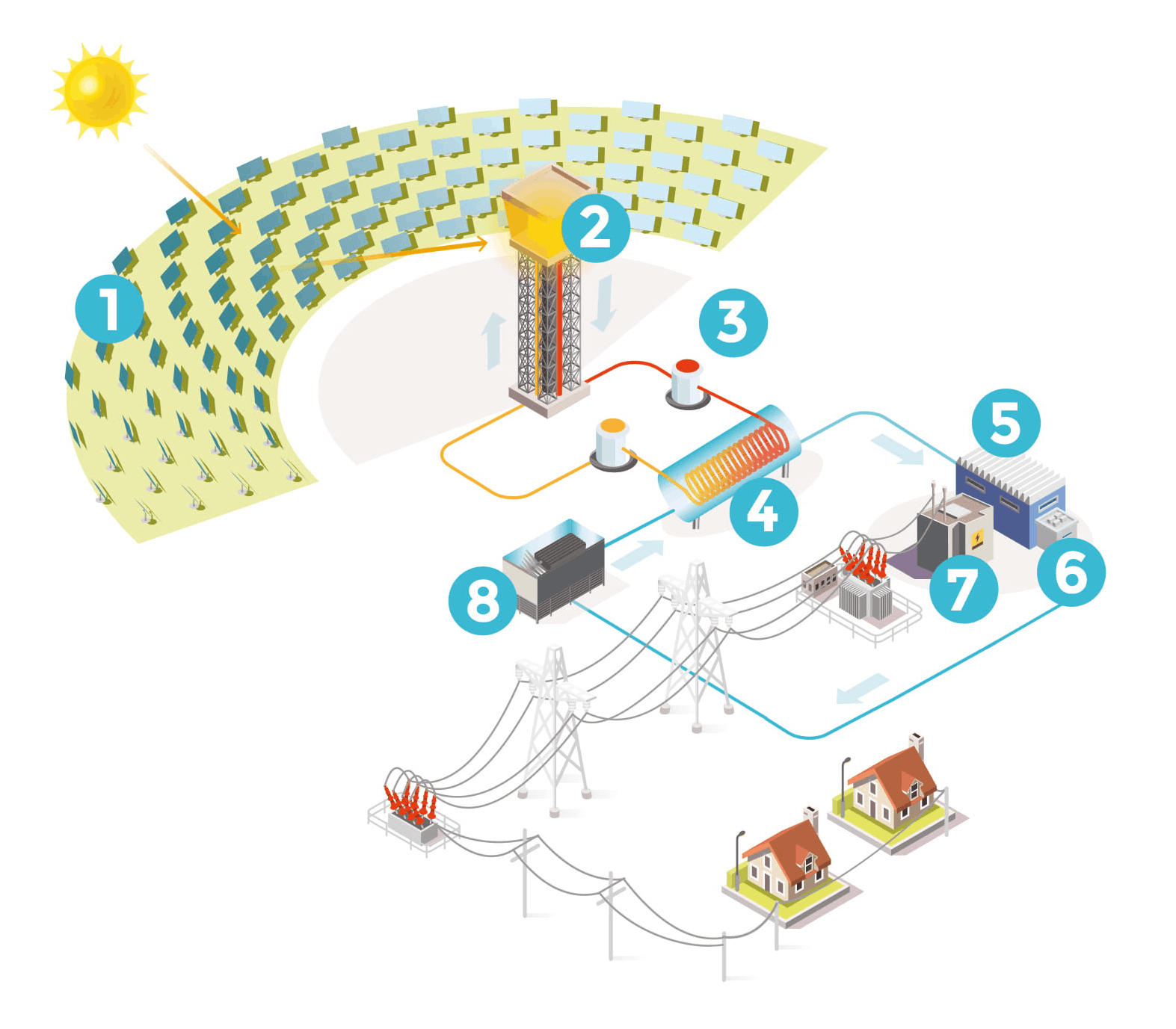
1

Heliostats

Large mirrors track the sun and concentrate sunlight onto a receiver.

3

Thermal storage system

A. Cold tank (yellow): Molten salts, at around 300°C, are pumped from the cold molten salt tank up to the receiver.

B. Hot tank (red): The hot molten salts coming from the receiver are stored in the hot tank before being pumped to the heat exchanger (steam generator), as required. The plant can continue to operate even when the storage is full.

5

Turbine

Like in other thermal power plants (coal-fired or nuclear) the steam is used to drive a turbine in a power block.

7

Transformer

The electricity is then adjusted to the voltage level required by the grid, before it is injected into the distribution or transmission grid, and finally sent to household end-users.

How CSP Works
Source: ESTELA (HORIZON-STE project)
2

Receiver (tower)

Inside the receiver, the reflected energy is absorbed to heat up a heat transfer fluid, such as molten salts, to around 600°C. Molten salts also serve as a sensible-heat storage medium.

4

Steam generator

Hot molten salts are pumped from the hot tank to a heat exchanger, where water is turned into high pressure steam. The cooled-down molten salts are sent back to cold tank, ready to be sent up the tower to be heated again.

6

Electric generator

The turbine drives the generator, producing electricity.

8

Condenser

After running the turbine, steam is sent to the condenser before it is sent back to the steam generator.